 Florida's Film, Television and the Arts Magazine


Louder Than Guns
In the U.S., the number of mass shooting incidents is higher than any other country. Among high-income countries with populations over 10 million, the U.S. ranks #1 for firearm homicide rates. Somehow, I don't see that as a statistic to be proud of. According to the Gun Violence Archive, in the last 72 hours, 175 shooting incidents have occured in this country. Of those, more than 175 victims have died. If you compare the number of suspects injured, killed or arrested in each case, many Americans, in every single state, are armed and literally getting away with murder. What's the common denominator? Guns. Not location. Not video games. Not education. Easy, unregulated access to guns.
Tell me when the last time your brain even registered the horror of a school shooting incident, more than a "oh, that's too bad". How about the last time the media even bothered reporting on one? The ones that stay with us, the ones that stay in the news, are the ones in which there were so many dead that it becomes unfathomable. The people, the dead, the families affected forever, get lost in the body count. And the main reason it may stay in the headlines is because someone trained and hired to do their job, failed to do their job. And children died. Uvalde. Marjory Stoneman Douglas.
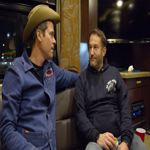
The documentary, Louder than Guns, is framed as a series of conversations, lead by Ketch Secor from the bluegrass band Old Crow Medicine Show, and filled with opinions from gun sellers, gun owners, gun enthusiasts, gun violence victims, families of victims, and kids. It's one of the most polarizing topics in the country.
The people in the film who were the most honest about what the overabundance of guns have done to the psyche of America were the kids in the film. One child, who may be 10 or 11 years old, tells Secor that they're so aware of gun violence that they "walk into a room and think 'if a shooter comes in, where am I going to hide?" The kids tell Secor they know it has to stop. They're begging for it to stop. Absolutely tragic. Absolutely true.
We know, from their own comments for decades, that following a mass shooting incident many Congresspeople offer the most pallid thoughts and prayers. Protecting gun rights more than human rights is what we see, what the kids express. "Protect the children"? When? After the fact? Schools are not safe. Public spaces are not safe. Almost no educators want MORE guns in their schools. Why? Let me repeat: because someone trained to do their job and protect students, FAILED.
Secor, who lives in Nashville, tells us he began this journey because three kids were shot dead in Nashville's Covenent School. So, like most people when it comes to gun control and the 2A issue, Secor didn't get involved until he was directly affected. He believes that when he and his band perform on stage, the audience is a cross-section of America, and because of this access, he saw a window of opportunity to talk to people about gun control from many sides of the debate. He saw this as a "way to move the needle and start a conversation on gun violence".
There are as many opinions on this subject as there are homes in America. The film takes us to Uvalde, the Waffle House, Chicago, Nashville, Highland Park. If you don't know what happened in any of these places, that goes straight to my point. The average American no longer remembers, nor is concerned with the violence, the lives extinguished, the innocent victims of gun violence. Thirty-one bullets fired in 71 seconds. Think about that.
In the film, some 2A proponents talk about how they see guns as 'tools'. Tools for what, exactly? Those who live in states like Montana, one stop on Secor's journey, say they need them for protection against wild animals. I can buy that explanation, but only up to a point. Here's the facts as to why I say that. Montana has the highest rate of gun ownership in the country. 66.3% of Montanan households own a firearm. In 2024, Montana had 159.3 gun sales per 1,000 residents, among the highest in the nation. As of 2026, Montana does not require permits to purchase, registration of firearms, or waiting periods for purchases.
Exactly how many wild animals are Montanans expecting to come in contact with while taking their groceries out of their SUV's into their homes? A 2020 study tells us that a minority of Montanans agreed or strongly agreed that their personal safety is threatened by grizzly bears (19 percent) and that grizzly bears pose a safety risk to people they care about (28 percent). Interesting, no? In addition, Montana is almost 85% white. So what are Montanan's really arming up for? What do they really fear?
When Secor visits other cities, the opinions vary wildly. Here, residents tell us that they believe some gun owners view guns as 'accessories'. They also ask, 'if the reason to have a gun is to protect yourself from other guns, if there were no guns, why would you need one?' Good question. Other countries do not have this problem. Other countries, with similar economic and sociological characteristics as the U.S., look at the systemic problem of gun violence in America and shake their heads.
Other than the kids, few people in the film were bold enough to address the obvious. Only one woman in the film, whose son died in the racially motivated Waffle House massacre, had the guts to even mention the NRA and the money flowing from that organization into the silk-lined pockets of Congress. I don't recall anyone saying the other word: FEAR. Manufactured fear puts people in gun stores and money in pockets.
So can there be change in America as it relates to our gun problem? Even incremental change is better than none. Rather than useless thoughts and prayers, the conversation has to start somewhere. Is Louder than Guns that start? I'll be positive and say it might be, depending on who sees the film and where it is shown. Personally, I see the 2026 Academy Award-winning doc short "All The Empty Rooms" as a harder-hitting first step on that ladder. The short would make an excellent companion piece to Louder than Guns.
I don't recall if Secor interviewed any politicians for the film, or had them participate in any of his focus groups. Most participants agreed, in general, that hearing opposing views did open a beneficial dialogue. However, and speaking realistically, as long as a single private interest group continues to fund politicians, and that group remains unchecked, the larger conversations will be few and far between. And they most definitely will not occur with the current administration.
Just as it affected Secor and incentivised him to open this dialogue, it's obvious that the only way change will occur is when those in power or their family, or possibly their friends, are directly affected by American gun violence. When the sound of the people demanding change becomes Louder than the Guns themselves, then the change is gonna come. Columbine was in 1999; change has been a long time coming.


